


Publications
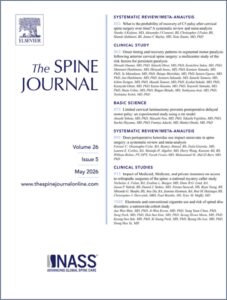
The impact of structural damage and muscle properties on spinal mobility in axial spondyloarthritis: A sensor-based analysis from the CASTRO registry
Authors: Diana Maria Margareta Moldovan 1, 4, Inmaculada Concepcion Aranda-Valera 2, 3, 4, Lourdes Ladehesa-Pineda 2, 3, 4, Maria del Carmen Abalos-Aguilera 2, 3, 4, Maria Angeles Puche-Larrubia 2, 3, 4, Alejandro Escudero-Contreras 2, 3, 4, Cristina Gonzalez-Navas 3, 4, Juan Luis Garrido-Castro 3, 4, Daniela Fodor 1, Eduardo Collantes-Estevez 3, 4, Clementina Lopez-Medina 2, 3, 4
Affiliations:
- 2nd Internal Medicine Department, Iuliu Hațieganu University of Medicine and Pharmacy, Cluj-Napoca, Romania
- Rheumatology Department, Reina Sofia University Hospital, Cordoba, Spain
- Maimonides Biomedical Research Institute of Cordoba (IMIBIC), Cordoba, Spain
- Medical and Surgical Sciences Department, University of Cordoba, Cordoba, Spain
Journal: The Spine Journal - April 2026 (DOI: 10.1016/j.spinee.2026.04.003)
-
Field & Applications:
- Medical
- Rheumatology
- Musculoskeletal disorder
- Progression monitoring
- Digital tools such as IMUs and MyotonPRO can complement radiographs and clinical indices, offering clinicians sensitive biomarkers to track disease progression, assess treatment response, and personalise rehabilitation strategies.
- From a practical perspective, IMUs and MyotonPRO are portable, non-invasive, and have demonstrated good reliability, supporting their potential use as objective tools to complement conventional clinical assessment of spinal mobility in axSpA
Background context: The loss of spinal mobility remains one of the most debilitating consequences of axial spondyloarthritis (axSpA). Despite therapeutic advancements, many patients still have limited mobility. Structural damage is a recognized contributor, but the role of paraspinal muscle properties in determining spinal mobility is less studied.
Purpose: To evaluate the relative contribution of structural damage and paraspinal muscle mechanical properties to cervical and lumbar spinal mobility in axSpA patients.
Study Design/Setting: Cross-sectional observational study.
Patient Sample: A total of 98 axSpA patients from the Córdoba axSpA Task Force Registry and Outcomes (CASTRO) who met ASAS criteria.
Outcome measures: Cervical and lumbar range of motion (ROM); paraspinal muscle stiffness and elasticity parameters.
Methods: Spinal mobility in the cervical and lumbar regions was measured in three planes using inertial measurement units (IMUs). Paraspinal muscle stiffness and muscle elasticity (logarithmic decrement) were quantified with the MyotonPRO device. Structural damage was assessed with the modified Stoke Ankylosing Spondylitis Spinal Score (mSASSS). Associations between structural damage, muscle properties, and mobility were explored using generalized linear models (GLMs), adjusted for age, sex, body mass index (BMI), and C-reactive protein (CRP). A sensitivity exploratory analysis was conducted using Gradient Boosting Machine (GBM) models.
Results: Structural damage, as quantified by mSASSS, was significantly associated with impaired spinal mobility. In adjusted GLMs, both structural damage and paraspinal muscle properties, including muscle stiffness and reduced elasticity (higher decrement), were independently associated with decreased ROM, most notably in the cervical spine. GBM models supported these findings, with SHAP values consistently identifying mSASSS, stiffness, and elasticity among the top predictors of mobility outcomes.
Conclusion: Structural damage and paraspinal muscle properties were independently associated with reduced spinal mobility in axSpA. Digital tools such as IMUs and MyotonPRO may support objective functional assessment and targeted rehabilitation strategies. However, the cross-sectional design limits conclusions regarding temporal relationships.
Keywords: axial spondyloarthritis, spinal mobility, structural damage, paraspinal muscle stiffness, paraspinal muscle elasticity, digital health tools
In summary, this study shows that both radiographic damage and paraspinal muscle properties are independently associated with reduced spinal mobility in axSpA. Technologies based on sensors enabled the integration of structural and muscular domains, providing novel insights into the multifactorial basis of mobility restriction. Future longitudinal studies that incorporate a broader range of biomechanical and imaging predictors are necessary to consolidate these findings and to investigate whether targeting muscle properties can influence the progression of mobility loss in axSpA.